
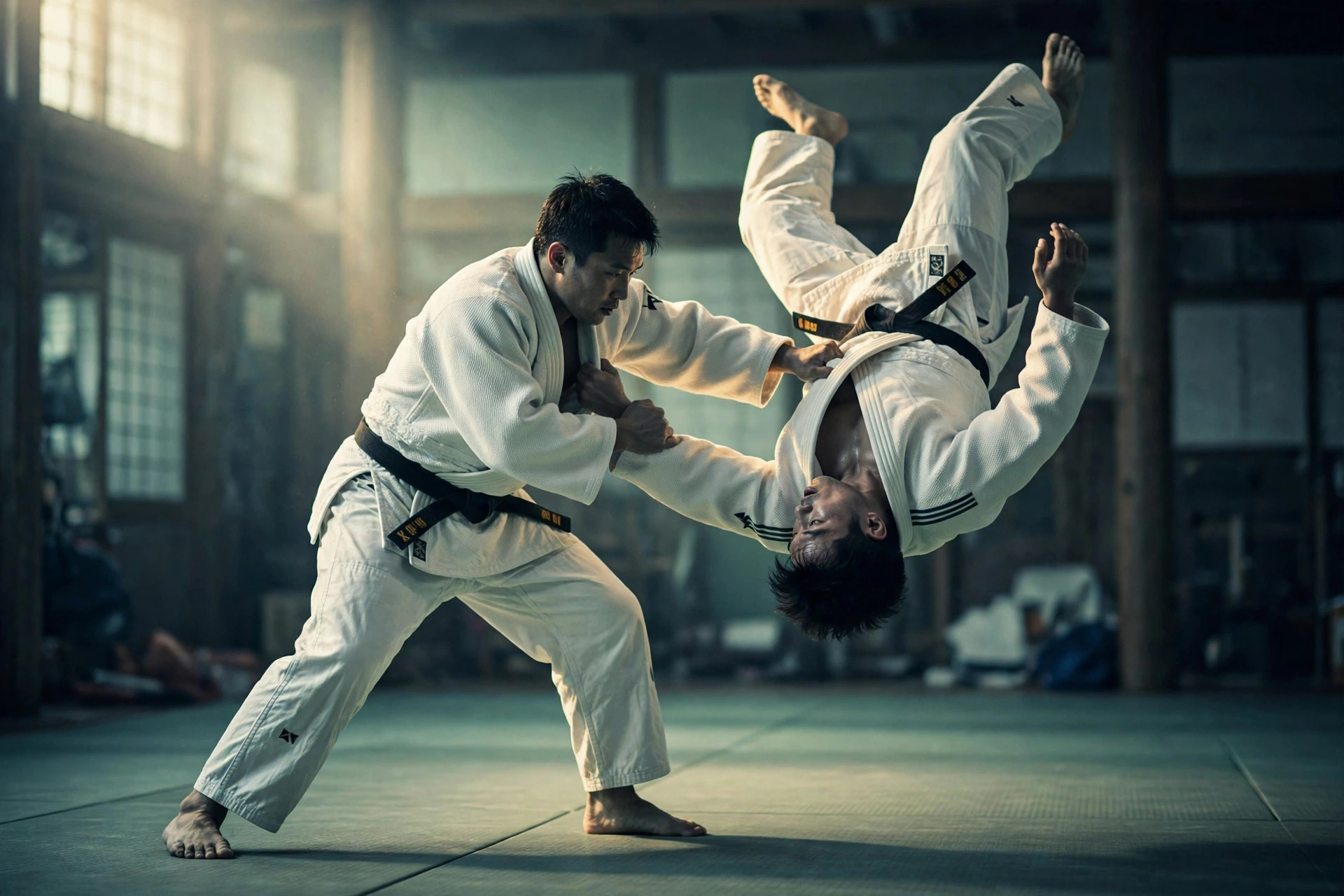
| Founded | Japan, 1882. Jigoro Kano stripped the dangerous techniques out of classical jujutsu and rebuilt what remained into a system of physical education, self-defense, and personal development — still taught in its original form at the Kodokan in Tokyo, the institute Kano founded. |
|---|---|
| The Name | Ju, meaning gentleness or yielding, and do, meaning way or path. The name is the method: use an opponent's balance, momentum, and commitment against them instead of meeting force with force. |
| The Two Principles | Seiryoku Zenyo — maximum efficiency, minimum effort: leverage over muscle. Jita Kyoei — mutual welfare and benefit: progress is shared or it doesn't happen, which is why etiquette in judo is structural, not decoration. |
| Hallmarks | Throwing someone larger than you without hitting them, and landing safely when someone does the same to you. There are no strikes in free practice or competition — the atemi-waza striking syllabus is preserved inside the kata. |
| The First Skill | Ukemi, the art of falling. Beginners learn back falls, side falls, forward falls, and forward rolls before they are thrown, and use ukemi in every single class for the rest of their judo lives. |
| The Canon | The Gokyo no Waza: forty core throws in five groups of eight, organized by Kano in 1895 as a teaching progression. The Kodokan's full recognized catalog is larger — 67 throws. |
| Ranks | Kano invented the kyu/dan structure most martial arts now copy: kyu grades count down toward black belt, dan grades count up from 1st dan (shodan). |
| The World Stage | The first Asian martial art in the Olympic Games, at Tokyo in 1964. Women's judo joined as a demonstration event in 1988 and became a full medal event in 1992. |
The teaching canon: five groups of eight, ordered so each set builds the balance, footwork, and falling confidence the next set demands.
The Kodokan's full catalog — the Gokyo's forty, eight older techniques kept recognized outside the syllabus, and further throws officially added since.
Nage-waza (throws), katame-waza (pins, chokes, and elbow-only joint locks), and atemi-waza (strikes, preserved in the kata).
From Nage no Kata to Koshiki no Kata and Kodokan Goshin Jutsu — where everything excluded from free practice is kept.
Kodokan Judo: An Instructor's Overview
The first time you see it done properly, it looks like a magic trick. The biggest beginner in the class, a hundred kilos of former rugby player, grips up with an instructor half his size, sets his feet, and pushes. A breath later he is flat on his back, the slap of his breakfall echoing off the walls, getting up laughing and completely unhurt. She didn't outmuscle him. She barely seemed to move. His balance went, his own momentum did the rest, and the fall that should have hurt was the safest part of the exchange. That single moment contains the whole art. This guide is the map of it.
Judo is the art of throwing someone larger than you without hitting them, and of landing safely when someone does the same to you. It was created in Japan in 1882 by Jigoro Kano, who stripped the dangerous techniques out of classical jujutsu and rebuilt what remained into a system of physical education, self-defense, and personal development. Today it is practiced in nearly every country on earth, contested at the Olympic Games, and still taught in its original form at the Kodokan in Tokyo, the institute Kano founded.
- Kodokan Judo: An Instructor's OverviewThe first time you see it done properly, it looks like a magic trick. The biggest beginner in the class, a hundred kilo…
- Judo for Beginners: Your First Month on the MatYour first judo class, the instructor lines everyone up, sits down on the mat, and says: "Fall backward." Your body ref…
- Jigoro Kano and the Founding of Kodokan JudoIt happens in the first month of every judo career: a throw you didn't see coming, the mat rushing up, and then you're…
- The Grip Fight: Kumi-Kata for the Developing PlayerWatch two experienced players in the first ten seconds of a contest and you will notice that nobody has thrown anything…
- Randori: How the Hard Part Makes You GoodYour instructor calls randori and your stomach tightens a little. Uchikomi felt safe. The drills made sense. In randori…
- Breakfalls That Still HurtYou are three months in. Your instructor pairs you up for nagekomi, and the crash mat comes out, and your stomach still…
- No Kuzushi: Why Your Throws Are All MuscleYou pull as hard as you can and he just does not move. His feet stay where they were, his weight stays over them, and y…
- The Stiff Arm TrapThe round has ninety seconds left and nothing has happened in any of them. Your partner stands bent at the waist like a…
- No Follow-Through: Judo's Newaza GapYour throw lands. Not clean enough for ippon, but he is down, turned, on his side, and for one second the ground is you…
- Seoi Nage Should Not Hurt: The Entry Is the InjuryAsk a room of judoka which throw has hurt them and seoi nage (shoulder throw) will be named by people who love it. The…
- Shido Math: Losing on Penalties You Never FeltNobody throws you. Nobody holds you down. The clock runs out, the referee raises a hand in the other direction, and you…
- Judo Quick Reference: Principles, Waza & the Gokyo
- Judo First Month: Ukemi Practice Plan & Progress Tracker
- Jigoro Kano & the Founding of Judo: Timeline Reference
- Gripping Playbook
- Randori Training Plan
- Ukemi Rebuild Plan
- Kuzushi Drill Book
- Posture and Movement Playbook
- Newaza Foundations Playbook
- Seoi Nage Reference: Mechanics, Entry Standards, and the Body
- Shiai Rules and Refereed Randori Playbook: The Penalty Card, the Cadence, and Practice That Counts the Scoreboard